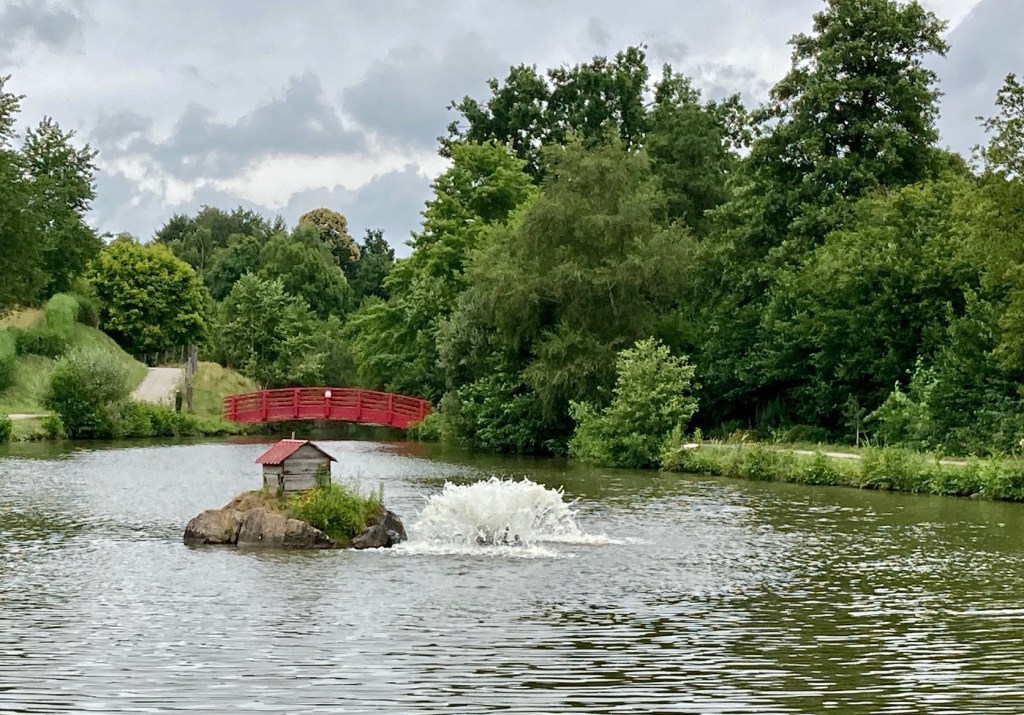
Last week Tricia and I were walking near the lake in the park at Ceaucé. We turned a corner and just ahead there was a group of four or five kids, between six and twelve years old. They were doing what kids do, calling out to the small black sheep behind the fence. As we approached and were passing them, they all, each one, said, “Bonjour Messieurs-dames.” Yes, for all you grammar checkers, that I keep so busy, it IS all run together as one word. It is a common shorthand for “Bonjour Monsieur, Bonjour Madame,” We hear it often when Tricia and I are out and about.
In France when you enter someone’s space “Bonjour!” is expected. Bonjour, is so much more than hello, which would be “salute,” which is far to casual for the first contact with a person. We have been in a restaurant when the hostess is seating someone and they pass near our table, they offer a “bonjour” as a recognition of entering our space, which we return to acknowledge them. When entering a shop a “bonjour” is offered, and a return bonjour is expected. Unaware visitors often wonder why they are not receiving the “service” they want, well it is because they have ignored one of the most basic of social niceties in France, the bonjour. It is considered rude to not offer a bonjour.
These children already knew and practiced the social custom, with perfection. In France, a child is taught how to behave in the society they live in. They learn this along with other French norms of talking quietly in restaurants and waiting patiently in lines.
One of the things I like about Europe is the sense of community. Certainly that includes the concept that a person’s individual desires may need to be toned down a bit in order to serve the community. That sense of community also includes common curtesies that show respect for others.
I remember, in my seminar days, doing seminars that included a section on etiquette – I also remember being asked why it mattered. The answer: our manners show our respect for others, they show our understanding and awareness of our community.
David Brooks wrote a recent article for “The Atlantic” titled, “How America Got Mean.” He wrote, The most important story about why Americans have become sad and alienated and rude, I believe, is also the simplest: We inhabit a society in which people are no longer trained in how to treat others with kindness and consideration.
The French respect their culture and tradition, they pass it down to their children. Recently there were some protests and uprisings in a few cities, over an issue that made the protests logical and somewhat justified. Macron, the Prime Minister, appealed to the parents to talk to their teens. My point here is not to endorse or condem the protests, but the expectation that parents are to pass on the decorum that is expected in the French society.
These days when we watch the news in the USA we are saddened by the lack of civility. The Senate uses words like, “The Gentleman, or Gentellady,” yet it is only empty words, in the next breath they viciously attack each other with childish names and accusations.
There was a time in our culture when people with differing positions were respectful to each other. Republican President Ronald Reagan and Democratic Speaker Tip O’Neil would get together regularly, and informally, to chat about issues over a glass of Scotch. They agreed on few issues in those days, but they handled it with decorum.
With all of its imperfections, I appreciate the civility that many cultures practice. We saw it in Japan and we see it in France. We may disagree, yet we still owe each other the decency of being joint members of our community.
 theTravelsketcher
Excellent article. Sadly it is true that the US has become less polite.
LikeLiked by 1 person
Yep.
LikeLiked by 1 person
Thanks for this great post. I am used to similar rules of etiquette having grown up French Canadian. I agree that etiquette is important. It acts as a barrier to behaviours that can escalate into much more serious issues and it also acts as a bridge to understanding others. Humans will always disagree and feel that they are right about whatever it is they believe, but etiquette can help us to communicate regardless.
LikeLiked by 1 person
Well said, thanks. And respecting the norms of the places we visit is important. I just read this morning about some people thinking Parisians were rude, but they were loud, wearing skimpy shorts and tank tops, etc. The French just don’t respond well to that.
LikeLiked by 1 person
Hear, hear… 100% agree… and slightly saddened by your thoughtful words. But then, when I remember the lilting sound of “bonjour” (even from male proprietors) when I walk into a shop, I feel a bit better.
LikeLiked by 1 person
Oui.
LikeLiked by 2 people